


If you are thinking of visiting the Costa del Sol and want to know what to see and do in Marbella, then read on!
Marbella is modern but classy, quiet but open all day and easily accessible.
At OK Holiday we want your visit to Marbella to be unforgettable, so we’re going to take you through its history and sights.
The city of Marbella is located some 57kms. south of Malaga on the Mediterranean coast, at the foot of the Sierra Blanca mountain range, which is why the city has a difference in altitude between the north and south of the city, giving it views of the sea and mountains. The municipality covers some 120kms. with about 28kms. of coastline, and a population of over 141.000 inhabitants, of which almost 20% are foreigners.
From the quiet East to the glamorous West. While the city centre is the geographical and demographic centre, Marbella is the sum of several areas: from Cabopino and Elviria in the eastern part of the municipality to Puerto Banús, Nueva Andalucía and San Pedro de Alcántara in the west.
When is the best time to visit Marbella?
Two events take place annually in Marbella, attracting visitors from all over the country.
One is the famous Starlite Festival, from mid-July to the end of August. Every year, famous artists flock to Marbella, showcasing themselves between fashion shows, film premieres and even a charity gala.
The other significant event is the Marbella Fair, which takes place in the second week of June (in 2020, from 8 to 14 June). It celebrates the town’s patron saint, San Bernabé (11 June). You’ll find attractions for the little ones, street food stalls and much more between Alameda Park and Avenida del Mar. The Night Fair is concentrated in the north of the city, near the La Cañada shopping centre.
History of Marbella
The oldest remains found in the area of Las Chapas and in the Cueva del Pecho date from the Palaeolithic and Neolithic periods, there are also indications of small Phoenician settlements, but what is clear is the settlement of the Romans, as confirmed by the existing remains of the Roman Villa of Rio Verde, from the 1st century, Las Termas de Guadalmina, known as Las Bóvedas, from the 2nd or 3rd century, and remains of Ionic capitals and the ashlars of the city wall in the Old Town, as well as the remains of the 4th century Paleo-Christian basilica of Vega del Mar.
In the Islamic period the Muslims built a fortress and later a castle in the 10th century, as well as crenellated towers to protect the city, which was made up of narrow streets and small buildings, the old town of Marbella still retains its original layout. The Arabs called the town Marbil-la, which may be the origin of the current name. The city was in the hands of the different Taifa kingdoms until it was conquered by Ferdinand the Catholic in June 1485.
The main economic activities from the time of the Muslims until the 19th century were based on livestock, agriculture and the products of the orchards that surrounded the city, the best known of which were figs, mulberry trees for the production of silkworms, and the sweet wine of Marbella, which was already famous in the 13th century.
The 19th century saw the arrival of industrialisation in the area, with the installation of the first blast furnaces in Spain, for the smelting of iron from the Sierra Blanca mines, making the province of Malaga the second most important industrial centre in the country. From the second decade of the 20th century it began to develop an economy based on construction and tourism of medium and high purchasing power, becoming one of the most important tourist centres in the world.
Tourism in Marbella, what to visit?
Old Town
From the Alameda Park, you will reach Calle África, one of the main entrances to Marbella’s picturesque old town. Contrasting with the more modern Avenida de Ricardo Soriano and the Paseo Marítimo, the old town will envelop you in an authentic atmosphere, proof of the city’s ancient inhabitants. Its narrow whitewashed streets open onto spectacular squares, flank museums and historic buildings and lead you into the hidden corners of Marbella.
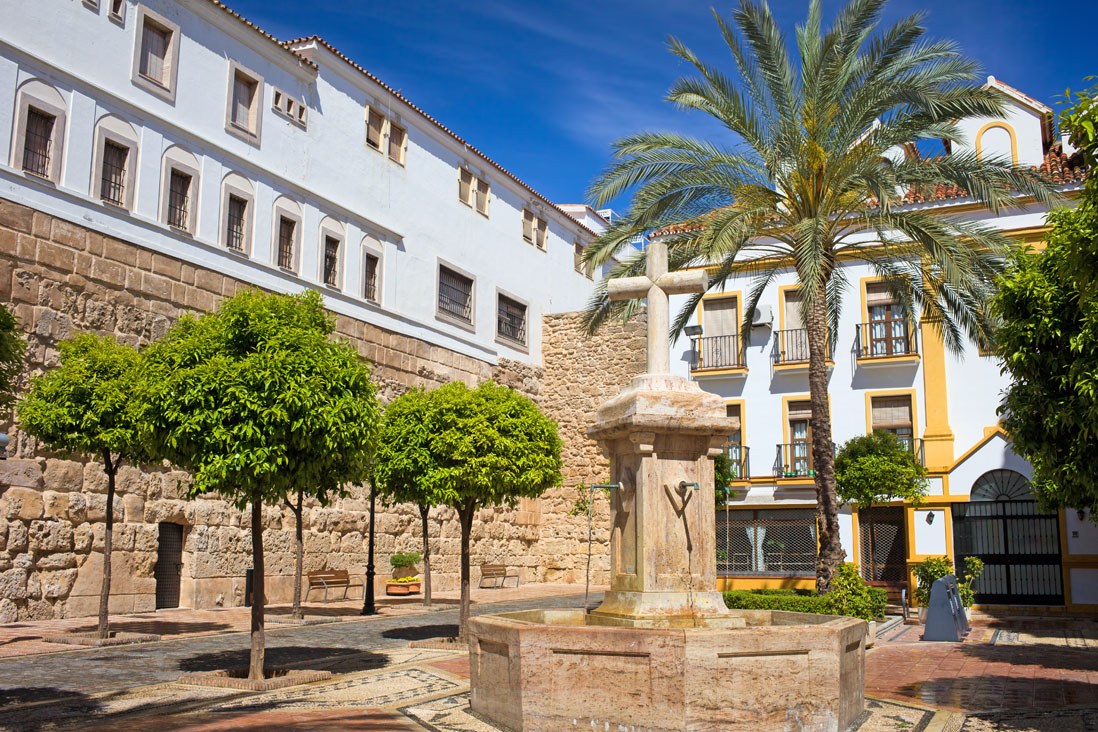
Plaza de los Naranjos
Built by Ferdinand the Catholic in 1485, in the Castilian Renaissance style similar to the Castilian squares of that period, it has a fountain dating back to 1704, in the square is located.
The Wall
Built in the 10th century by Abderrám III, it underwent alterations between the 14th and 16th centuries.
Church of Santo Cristo de Vera Cruz.
Its construction dates back to the 16th century and was enlarged with the construction of a Tower and a small chapel. It consists of a single nave, with a Tuscan column that supports the choir. The façade is made of carved stone.
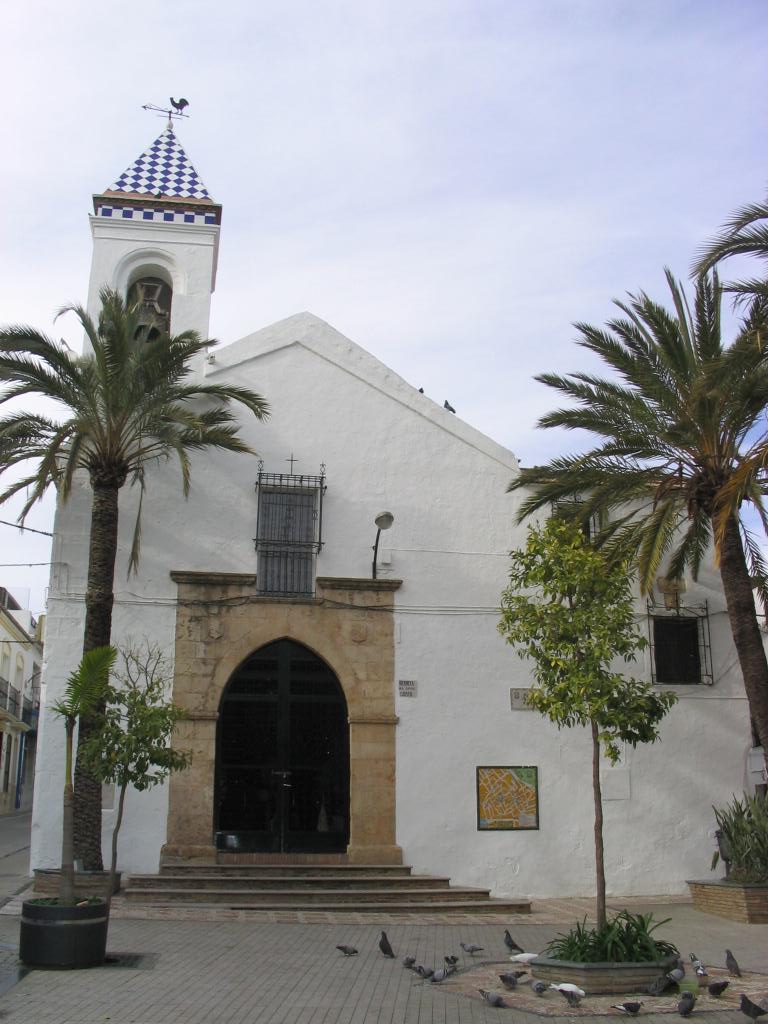
The Chapel of Santiago
Built in the 15th century, of very simple construction with a single nave, it is the oldest church in the city.
House of the Corregidor
Built in 1552, it is worth mentioning its Gothic-Mudejar and Renaissance façade.

Chapel of San Juan de Dios
Built by the Catholic Monarchs in Gothic-Mudejar style, its interior features a Mozarabic coffered ceiling and a Mudejar armouring, and on the façade the carved stone façade, its wooden door with the royal coat of arms and the coat of arms of the Order of San Juan de Dios.

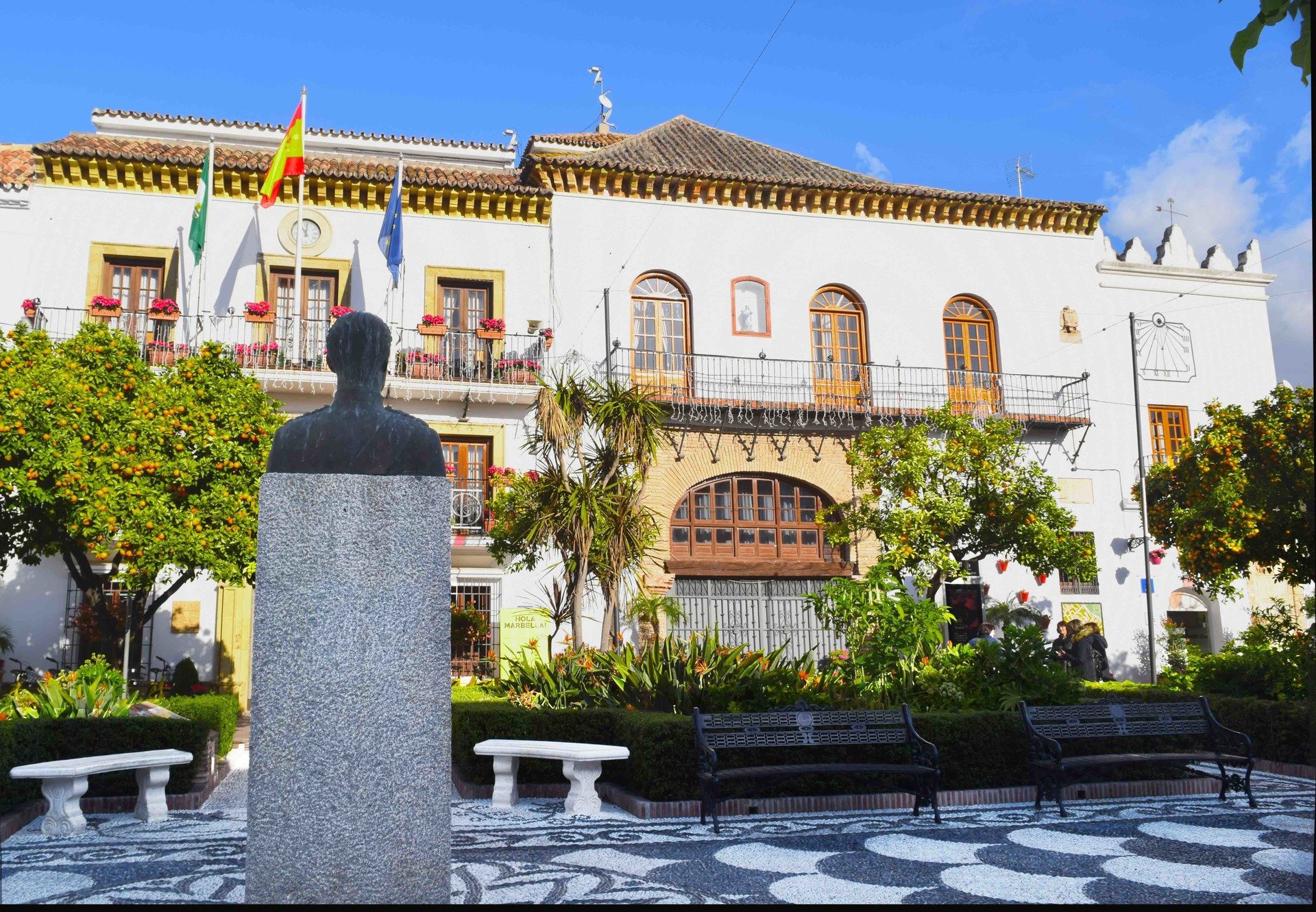
Town Hall
Built in 1568, its façade features a large Mudejar-style door, a wrought iron balcony, a sundial, coats of arms and commemorative tombstones.
Church of Nuestra Señora de la Encarnación
Initially built in 1510, it has undergone several reconstructions and alterations, the most important in 1710 and then throughout most of the 20th century. The Baroque style church has three naves and the Great Organ in G major, with 5,000 tin pipes on wood and copper, is one of the most important organs built in Spain. On the outside, it is worth mentioning the rococo style façade carved in ochre-coloured stone and the square tower, which is about 50 metres high, finished in a pyramidal shape and topped with a weather vane.

La Alameda Park
This charming 18th century park is one of the oldest urban parks in Marbella. Here you will find ceramic benches shaded by tall banana trees, the splendid Fuente del Rocío, dating from 1792, and a tranquil atmosphere that allows you to relax.

The city of Marbella, as well as having a rich history, having been home to Phoenicians, Visigoths, Romans and Arabs, is also the capital of luxury in both Andalusia and Spain.
One of the most spectacular ways to get to know Marbella is to take a stroll along the pleasant promenade in the early morning or late evening: an extensive promenade that spans the entire main area of the town, where palm trees guard pretty terracotta villas, where luxurious hotels glide elegantly down to the beach (only imposing in the most discreet way) and people of all ages stroll, run, rollerblade, cycle and chat in pleasant cafés, traditional tapas bars and quiet chiringuitos serving all manner of delicacies for the hungry and thirsty.
During your stay in Marbella, do you want to know where to enjoy the best gastronomy? find out first-hand the best information about the golf courses? discover where to have an after-dinner drink?
Keep reading our OK Holiday Marbella guide and let yourself be surprised.